Niseko onsen: which stays have their own hot spring, and who actually stays there
A handful of Niseko properties have real onsen. The Japanese and international review counts on the same hotels reveal something the English-language guides never mention.
Jun Uchiyama · Last updated September 2026
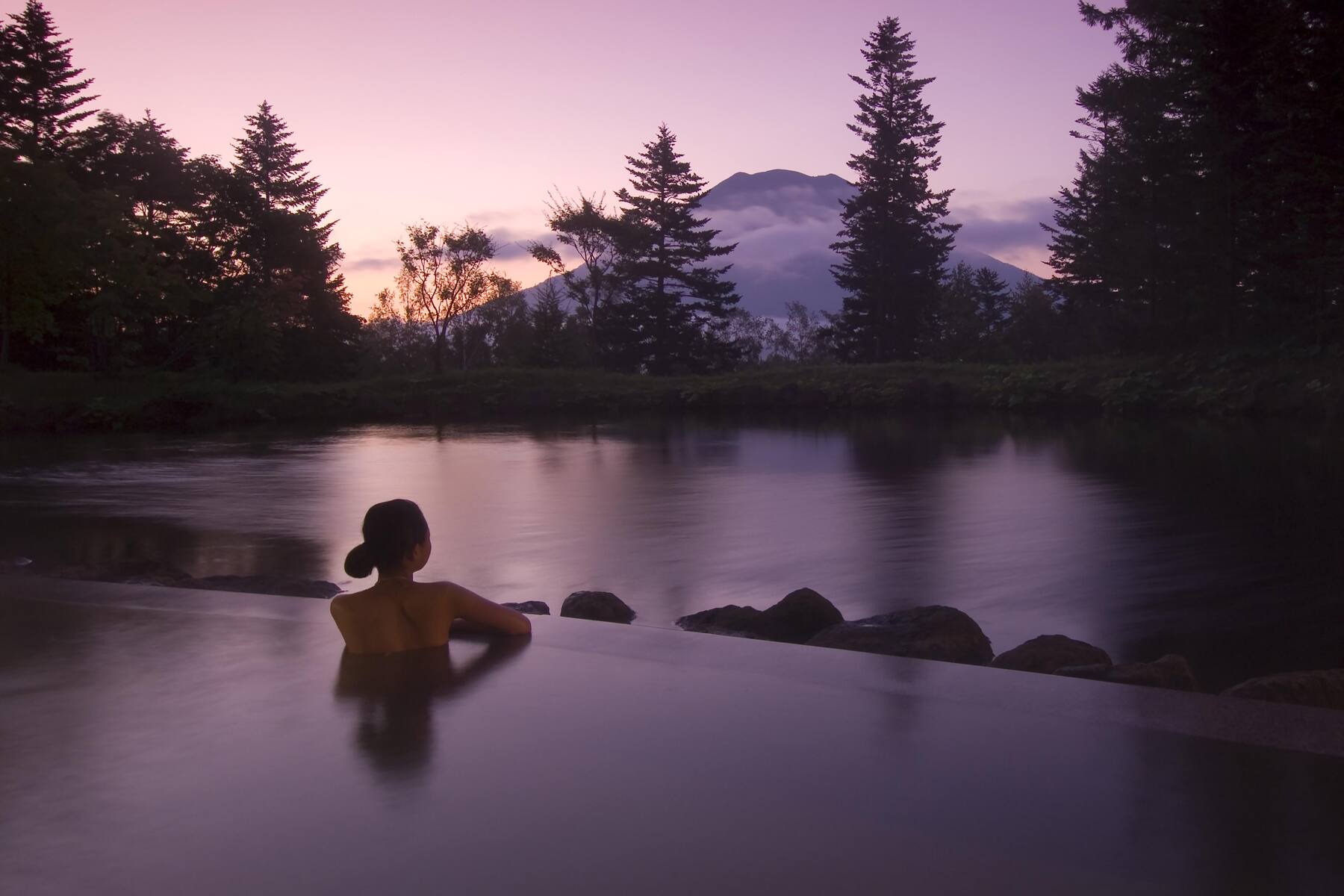
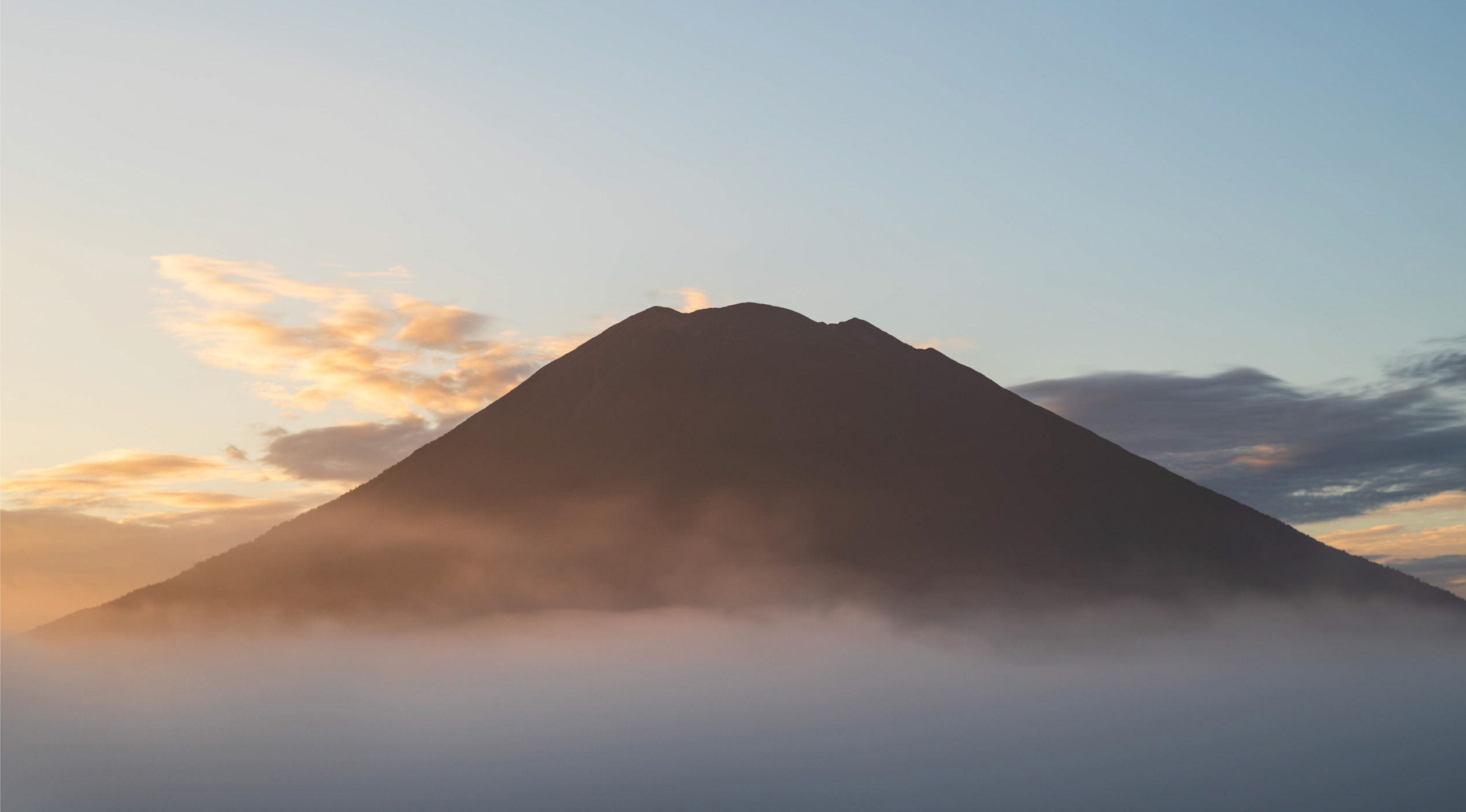
Snow gets all of Niseko’s attention, and the hot water gets almost none of it in English. That is odd, because the two are the same geology — the volcano that makes the mountain makes the springs — and because the bath is what most guests end up describing when they come home.
It is also the part of the valley where the booking pages are least reliable. “Spa”, “public bath”, “hot spring” and “onsen” are used interchangeably on English listings for four different things, and the difference is not cosmetic: it decides whether you are sitting in mineral water from the ground or in a heated tank.
Where the onsen actually are
Two clusters, and they are not the same kind of thing.
Konbu Onsen, west of Annupuri, is a hot-spring area in the older Japanese sense: inns built around the water, some of them long-established, where the bath is the reason the building exists. The name is the name of the spring.
Hirafu has onsen too, but they are hotel baths — recent, built by luxury properties that added a spring-fed bath as a facility rather than growing around one. Both are real onsen. They are different experiences.
A third group sits in Niseko Village, attached to the resort hotels, where the bath was part of the resort plan alongside the lifts.
Of the eighty-three properties with a page on this site, fourteen record a natural hot spring on site: six in Hirafu, three in Hanazono, three in Niseko Village and two on the Annupuri side. That is the whole list, and it is still smaller than the number of Niseko listings that use the word — several properties market a hot spring on their own site without saying so anywhere on the platform we read from.
Read the words on the booking page carefully
Three Japanese terms appear on these listings and mean different things.
| Term | What it means |
|---|---|
| 温泉 (onsen) | Naturally heated mineral water from the ground |
| 大浴場 (daiyokujo) | A large shared bath — not necessarily hot-spring water |
| 露天風呂 (rotenburo) | An outdoor bath, usually alongside an indoor one |
A property can offer a daiyokujo with no onsen at all. On an English booking page both tend to be rendered as “public bath” or “spa”, and the difference disappears. If the mineral water matters to you, the presence of 温泉 in the Japanese facility list is the thing to look for.
 Lodge Koropokkuru official site
Hirafu, and the cleanest illustration of the distinction. Its facility list records a large shared bath, a ski drying room and a coin laundry, and no natural hot spring — so it is a rotenburo-style bathhouse without an onsen, which on an English page reads identically to the hotel next door. 107 reviews at 9.4 out of 10, in a 38-room lodge; the bath is well liked, and it is still not a hot spring in the sense the word usually carries.
The second trap is that the two platforms disagree, sometimes in each direction. Several Niseko properties list a 大浴場 and a 露天風呂 on the Japanese booking site while the international listing records nothing about a bath at all — the facility data was simply never filled in on one side. Others go further: a property’s own site names a natural spring outright, in English, while neither booking platform’s facility list mentions 温泉 at all. If a property looks bath-less to you, or looks like it has a bathhouse but no spring, and it is a Japanese-run hotel, check the property’s own site before concluding anything.
 Niseko Grand Hotel official site
The clearest example of the first gap. Its own site describes hot-spring water from two different sources; the Japanese platform lists a large shared bath and an outdoor bath; our read of the international facility list recorded neither. 357 international reviews against 410 Japanese ones, at ¥222,191 for five peak nights — among the cheapest hotels in the valley with a page here.
 Niseko Onsenkyo Ikoino Yuyado Iroha official site
Annupuri, and its name contains 湯宿 — hot spring inn. The review counts are almost exactly level between the two platforms — 245 international, 247 Japanese — which is rare here and usually means a property that both markets have found independently. ¥346,500 for five peak nights.
 Ki Niseko official site
Hirafu, and the second gap in its purest form: the Japanese facility list we read records an outdoor bath and a large shared bath with no explicit onsen, but the property's own site names a natural onsen outright. 343 reviews at 9.2 out of 10. Three properties on this site turned out to have this same gap; this is the one in Hirafu.
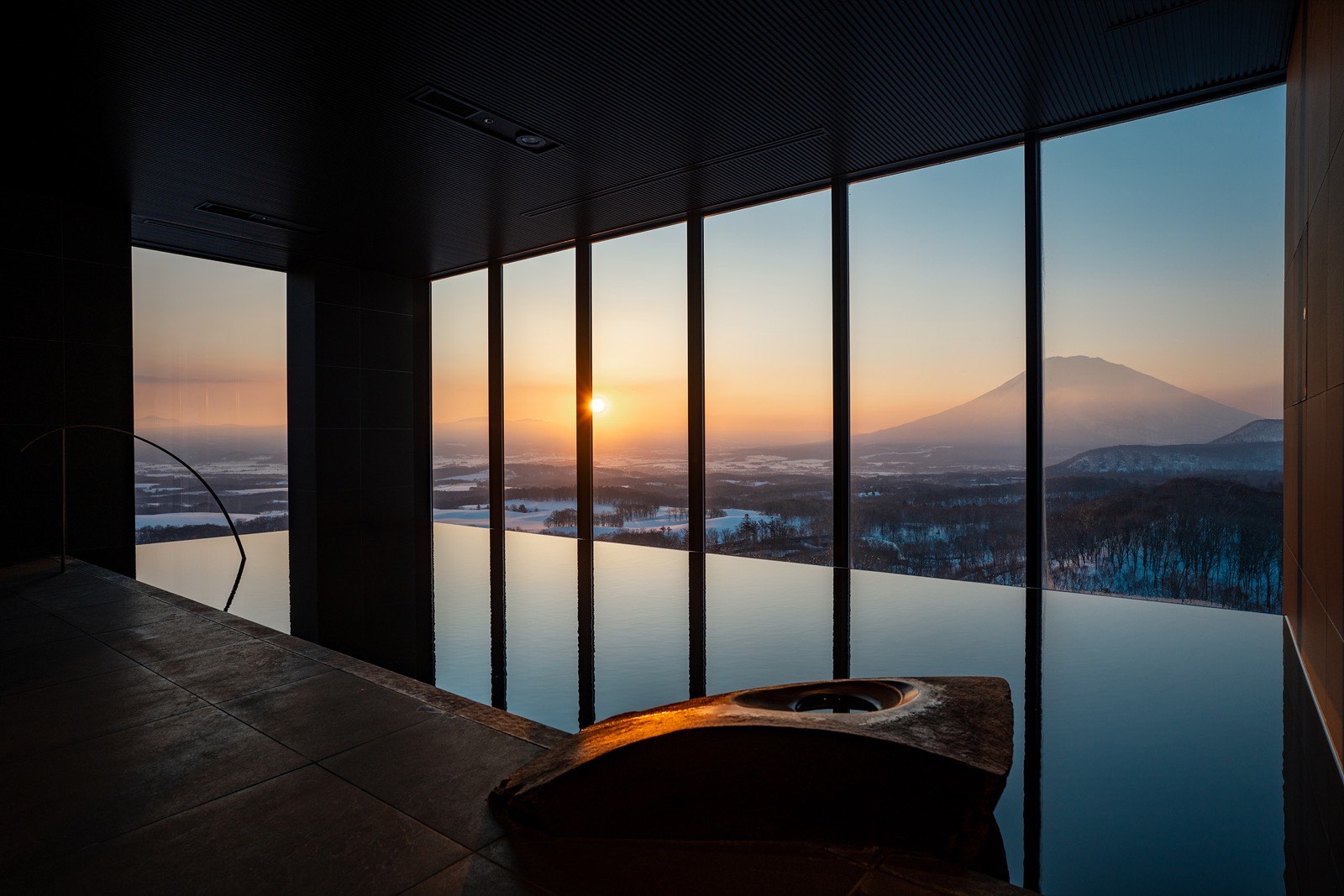 Chalet Ivy Weiss, Niseko official site
Hanazono, and the same gap again: no spring recorded in the data we read, and a natural onsen — indoor and an outdoor infinity bath — named plainly on the property's own site. 87 rooms, opened for the 2025-2026 winter, 32 reviews at 9.7 out of 10 with sub-scores of 10, 9.8 and 9.9. ¥568,100 for five peak nights.
 Nikko Style Niseko HANAZONO official site
Hanazono again, and 234 rooms — the largest property on this site. The Japanese facility data we read recorded a large shared bath and a sauna with no spring; the property's own site lists a natural hot spring among its main facilities. 295 reviews at 9.0 out of 10, the biggest review sample in Hanazono, at ¥932,250 for five peak nights.
The finding nobody writes about
Most Niseko properties are listed on both an international booking platform and a Japanese one. Comparing the two review counts for the same property tells you who is actually sleeping there — and the traditional hotels separate sharply from everything else.
| Property | Japanese platform | International platform | Ratio |
|---|---|---|---|
| Niseko Prince Hotel Hirafutei | 877 | 262 | 3.3× |
| Niseko Northern Resort An’nupuri | 1,253 | 404 | 3.1× |
| Niseko Konbu Onsen Hotel Kanronomori | 863 | 310 | 2.8× |
| Niseko Grand Hotel | 410 | 357 | 1.1× |
| Tsuruga Bessou Moku-no-Sho | 143 | 138 | 1.0× |
Now the other direction, at properties a few kilometres away:
| Property | Japanese platform | International platform | Ratio |
|---|---|---|---|
| Zaborin | 3 | 112 | 0.03× |
| Niseko Landmark View | 4 | 106 | 0.04× |
| Niseko Central Condominiums | 1 | 88 | 0.01× |
Read from 9 September 2026.
The traditional hotels are a domestic market. Three times as many Japanese guests review them as international ones, while the condominiums and villas beside them run thirty to a hundred times the other way. The two populations are staying in the same valley and barely overlapping.
For you this cuts both ways. These places are less likely to have English-first service, international breakfast, or staff who expect you not to know the etiquette. They are also where the water is, they are materially cheaper than the ski-in properties, and you will not be queuing behind your own countrymen for the bath.
Where the water is, administratively
Niseko is two municipalities, and the split is not cosmetic where the baths are concerned. Of the eighty-three properties here, fifty-five sit in the town of Kutchan — that is Hirafu, Hanazono and Kutchan town itself — and twenty-eight sit in the town of Niseko, which is Annupuri, Konbu and Niseko Village.
The fourteen natural hot springs split nine to five towards Kutchan: the Hirafu and Hanazono hotel baths against Konbu Onsen and the Niseko Village resorts. But they divide by kind along the same line regardless of the count. The Kutchan nine are recent buildings that added a spring. The Niseko five are Konbu Onsen and the Niseko Village resorts, which is to say the older water. The municipality that actually carries the name is the one where the onsen tradition lives, and almost nothing in English says so.
There is a second consequence. The Annupuri side is where our facility data is thinnest, because those properties are documented in Japanese first and their English listings were filled in by somebody else. The two largest hotels on that side hold no bath at all in the international facility list we read, and at least one of them sells hot spring bathing in its own words.
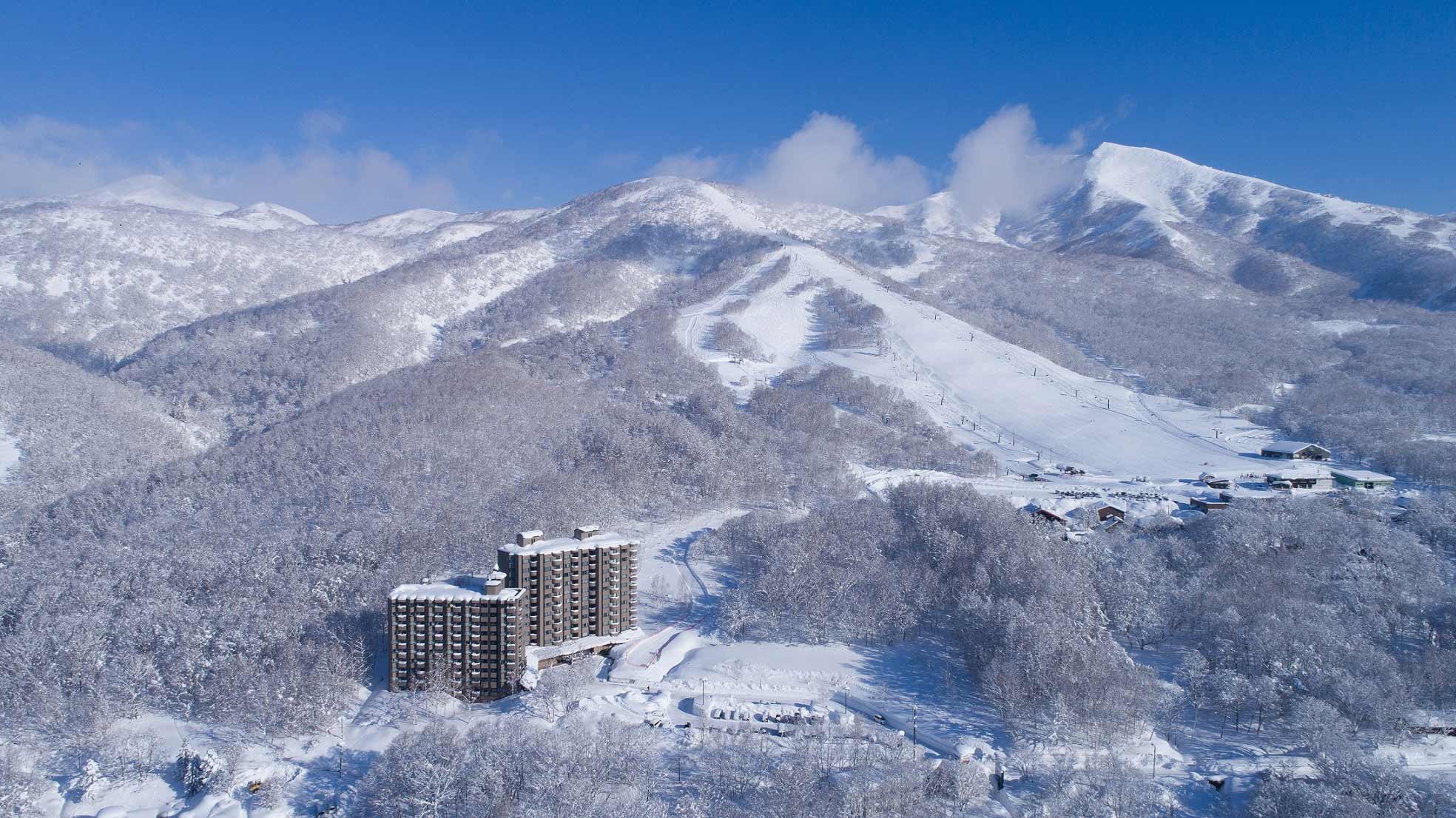 One Niseko Resort Towers official site
519 reviews at 8.2 out of 10 and ¥423,510 for five peak nights — the most-reviewed property on the Annupuri side. Its own site sells hot spring baths; the international facility list we read records no bath at all. 372 reviews on the Japanese platform against 519 international, which is the balance a property gets when both markets have found it.
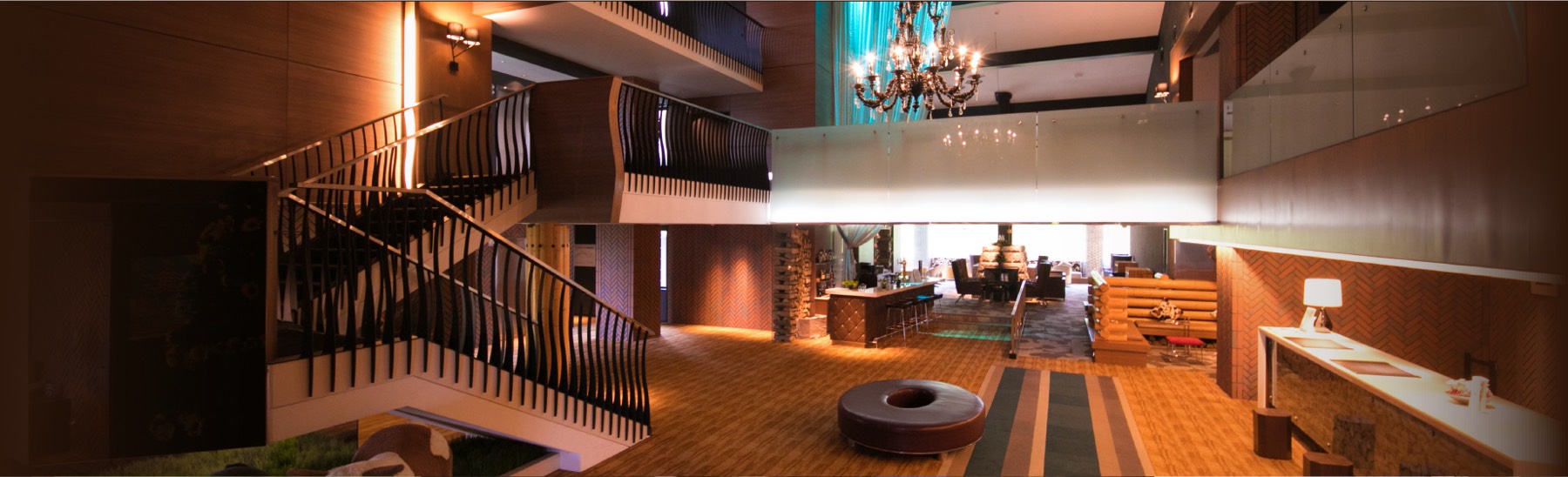 Niseko Northern Resort An'nupuri official site
1,253 reviews on the Japanese booking platform against 404 international — the largest domestic sample in the valley, and the starkest split on this site at roughly three to one. Two of the five restaurants the Annupuri ski area lists are inside this hotel, which is what a domestic resort hotel of this vintage looks like from the outside.
The question that actually decides it
Not “which hotel has an onsen” — fourteen do — but what you want the bath to be.
There are three answers in Niseko and they cost wildly different amounts. Of the properties here with a hot spring recorded, the cheapest quotes ¥330,300 for five peak nights and the dearest ¥2,207,900. That is nearly seven to one for the same nominal feature, and almost none of the difference is the water.
If the bath is the reason for the trip: Konbu Onsen
The inns on the Annupuri side were built around the spring. The bath is not an amenity there; it is the product, and the rooms, the meals and the pace of the evening are arranged around it. The trade is that you are at the far end of the valley, dinner is whatever the inn is serving, and the shuttle timetable governs your day.
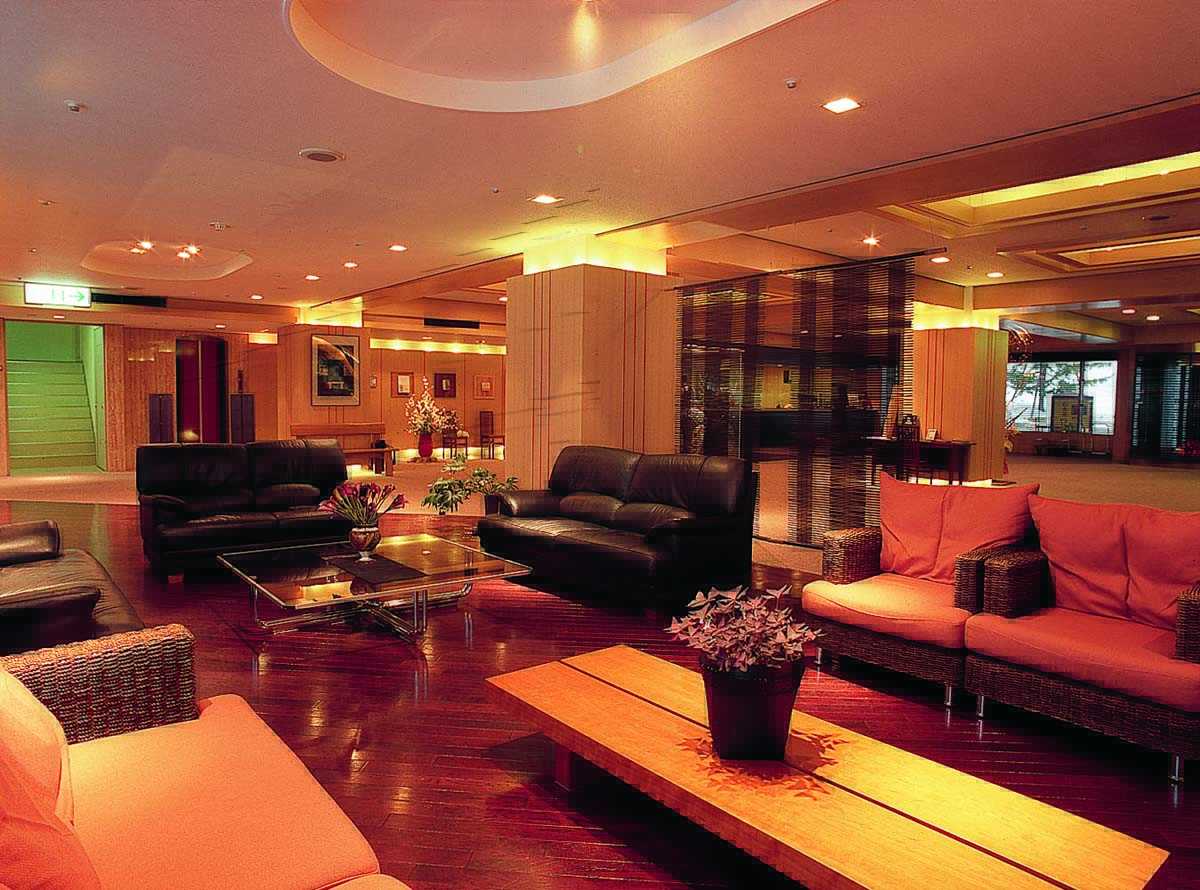 Niseko Konbu Onsen Hotel Kanronomori official site
Konbu Onsen, and the reason the area has the name. It carries roughly three times as many reviews on the Japanese booking platform as on the international one — the clearest example in the valley of an onsen hotel that international visitors have not found. ¥330,300 for five peak nights makes it the cheapest hot-spring stay with a page here, by a wide margin.
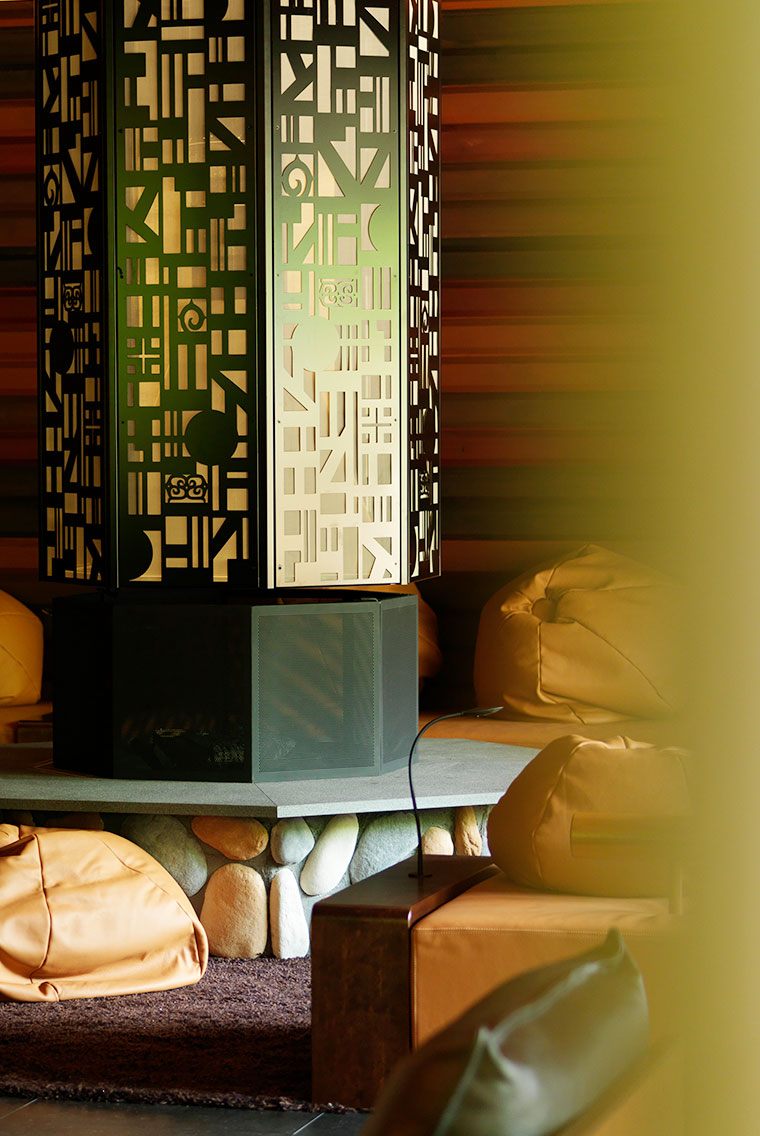 Niseko Konbu Onsen Tsuruga Bessou Moku no Sho official site
The other side of Konbu: a small ryokan at 9.5 out of 10 across 138 reviews, the highest-rated stay on this side of the valley with a meaningful sample. The two review counts are almost level — 143 Japanese against 138 international — which is unusual here and suggests both markets have found it. ¥756,976 for five peak nights, which is ryokan pricing rather than hotel pricing.
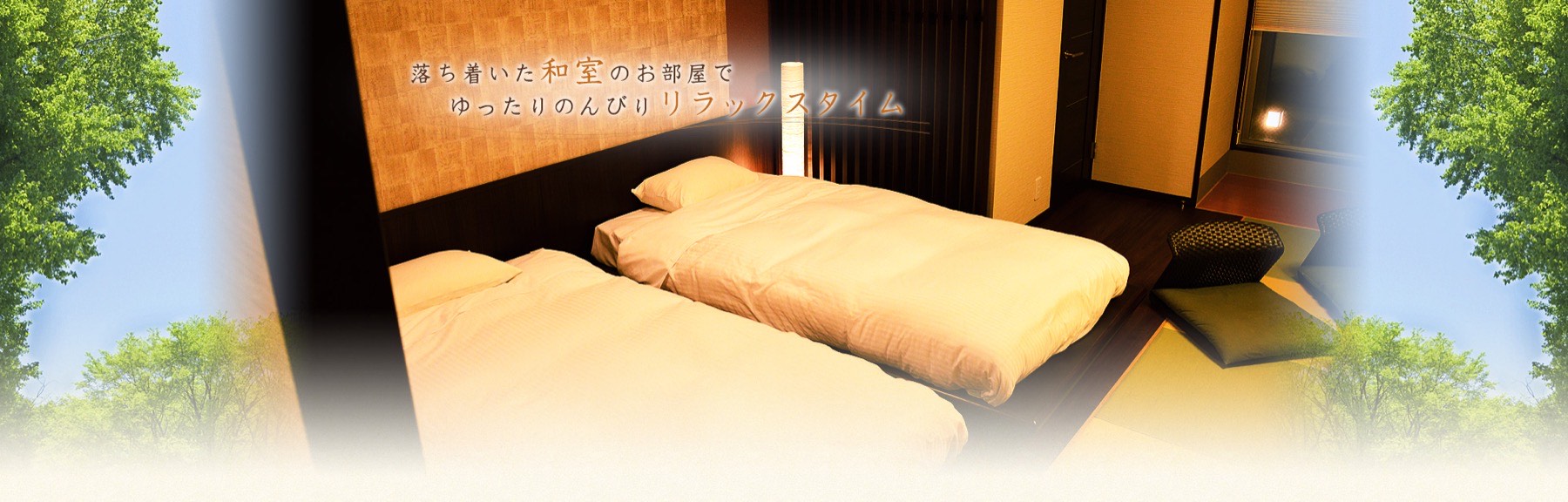 Niseko Prince Hotel Hirafutei official site
Hirafu rather than Konbu, but firmly in this category by who books it: 877 reviews on the Japanese platform against 262 international, the most lopsided split of any property here. A full onsen with an outdoor bath, and a 7.8 score that reflects an older hotel being graded by a domestic audience with different expectations than a ski crowd.
If the bath is part of a resort day: Niseko Village
Here the spring and the lifts were planned together, which makes this the one part of the valley where “ski, then bathe, then eat, without going outside” is literally how the day works. The bath is excellent and it is not the reason the building exists.
Hilton Niseko Village official site965 reviews, the largest sample in Niseko, at 8.1 — a score that says a great many people stay here and find it fine. It records an outdoor bath fed by a natural hot spring, and it is one of the few onsen properties in the valley open in summer, when five nights fall to ¥134,484 from ¥505,817.
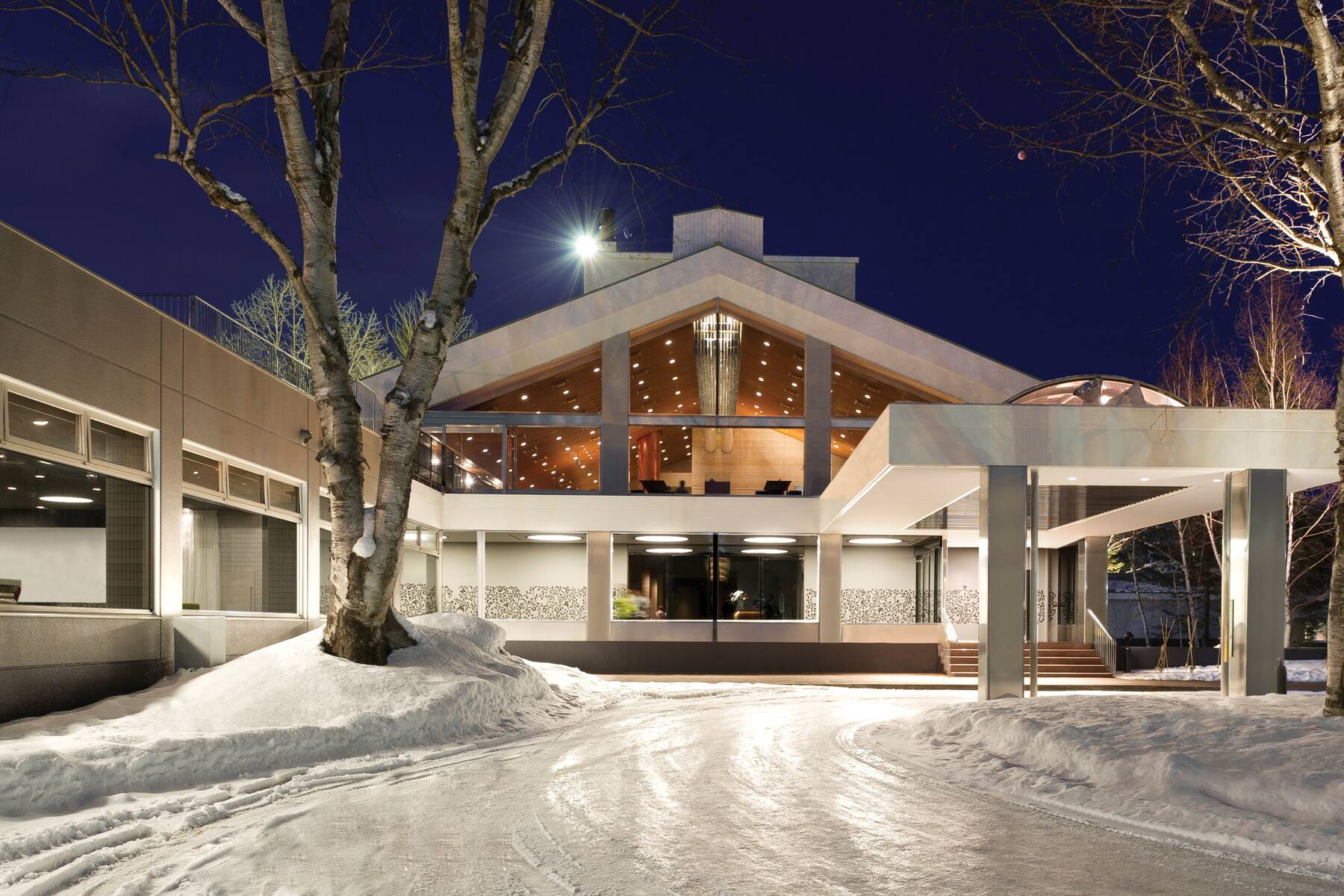 The Green Leaf Niseko Village official site
The other Niseko Village hotel with a spring on site, and the better-value of the two on paper: ¥472,272 for five peak nights against the Hilton's ¥505,817, at 8.2 out of 10 across 669 reviews. Records an outdoor bath, a large shared bath and a natural hot spring — the full set, which not every property on this list has.
If the bath is a feature of an expensive hotel: Hirafu
Six of the fourteen are in Hirafu, and they are mostly recent buildings at the top of the market that piped mineral water into a very good bathhouse. This is the group where the onsen is real and the premium is being charged for everything else.
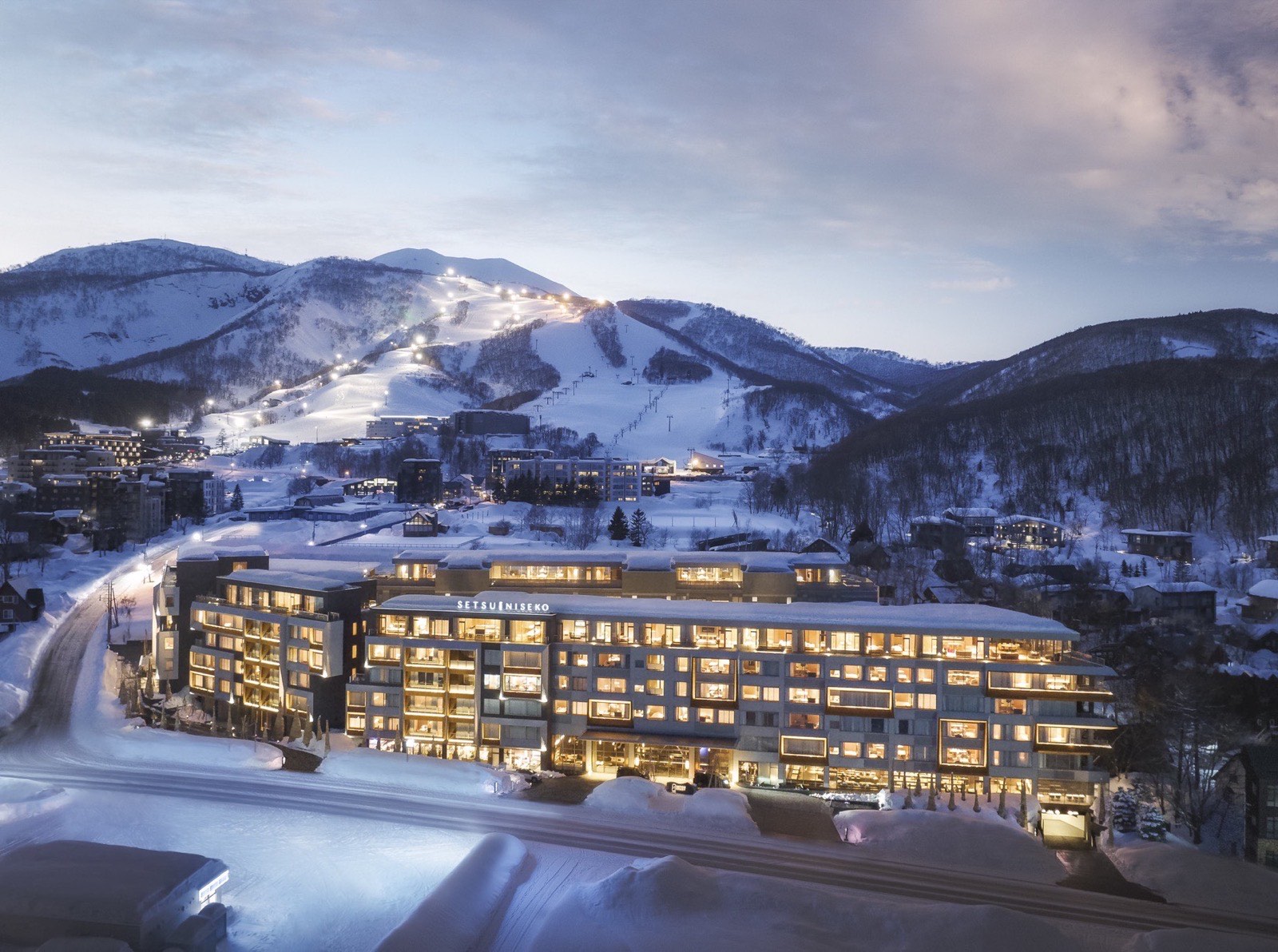 Setsu Niseko official site
Hirafu, with the full set recorded — outdoor bath, large shared bath, natural hot spring — and ¥1,783,100 for five peak nights. 444 reviews at 9.4 out of 10. A different experience from the Konbu inns above and priced roughly five times higher for water that comes out of the same volcano.
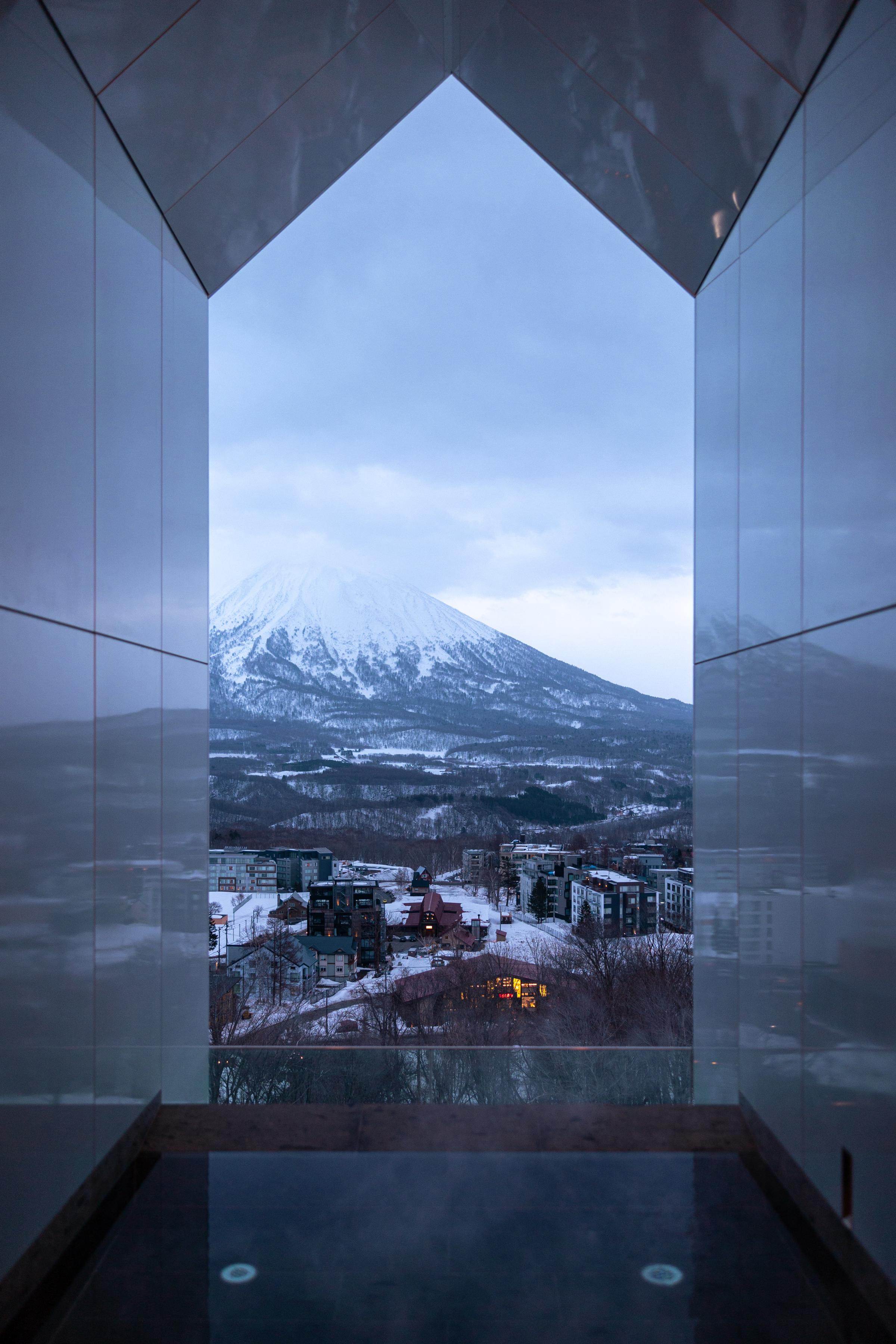 MUWA Niseko official site
Hirafu, ¥1,375,000 for five peak nights, 57 international reviews against 8 on the Japanese platform. That ratio is the signature of this whole category: built for, marketed to, and booked almost entirely by overseas guests, with a genuine onsen inside it.
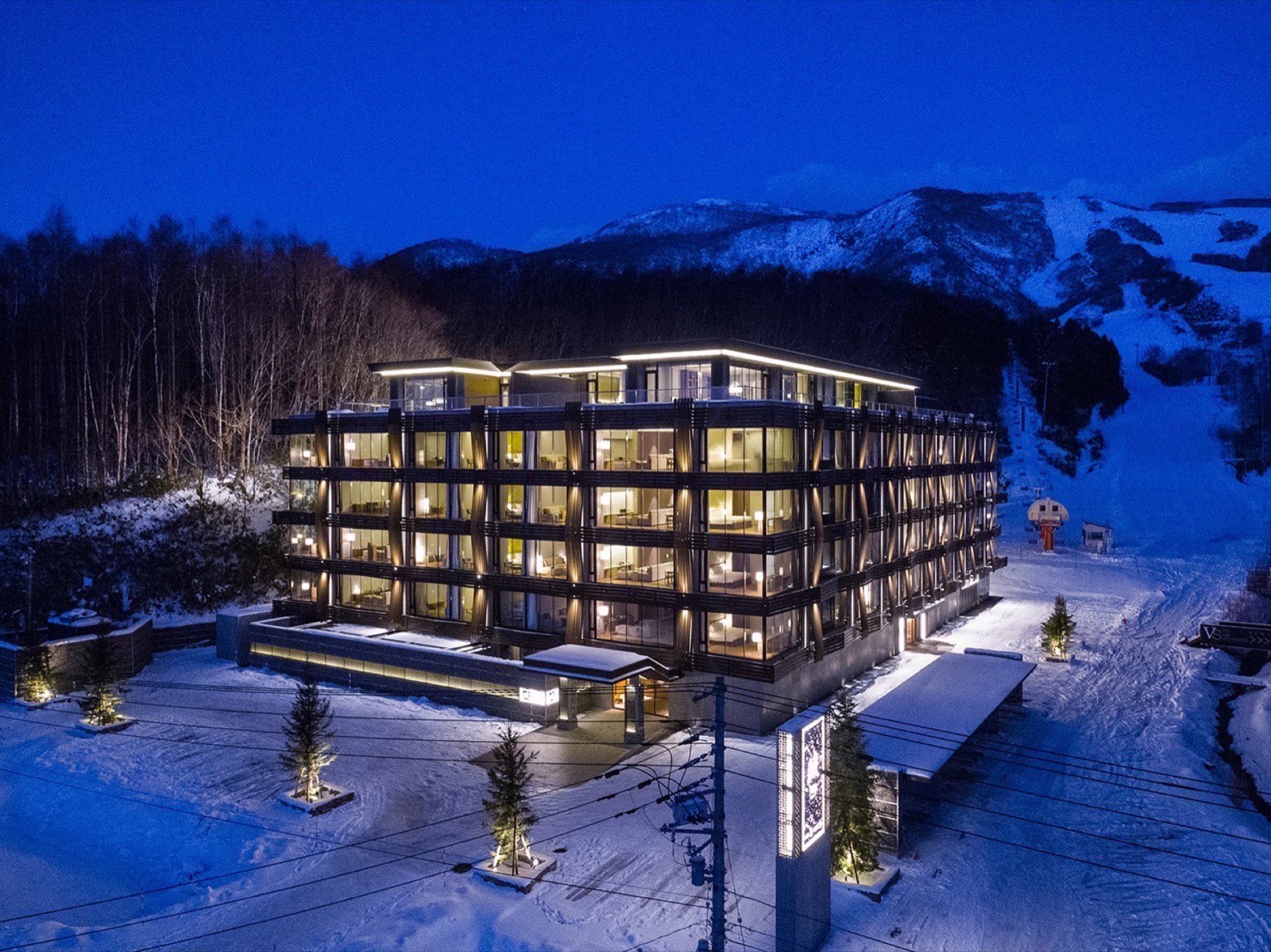 Aya Niseko official site
Hirafu, with an outdoor bath and a natural hot spring recorded, and 311 reviews at 9.2 out of 10. It also carries an unqualified ski-in ski-out claim with no distance behind it, which is worth reading twice — and a bath that is why people book it anyway.
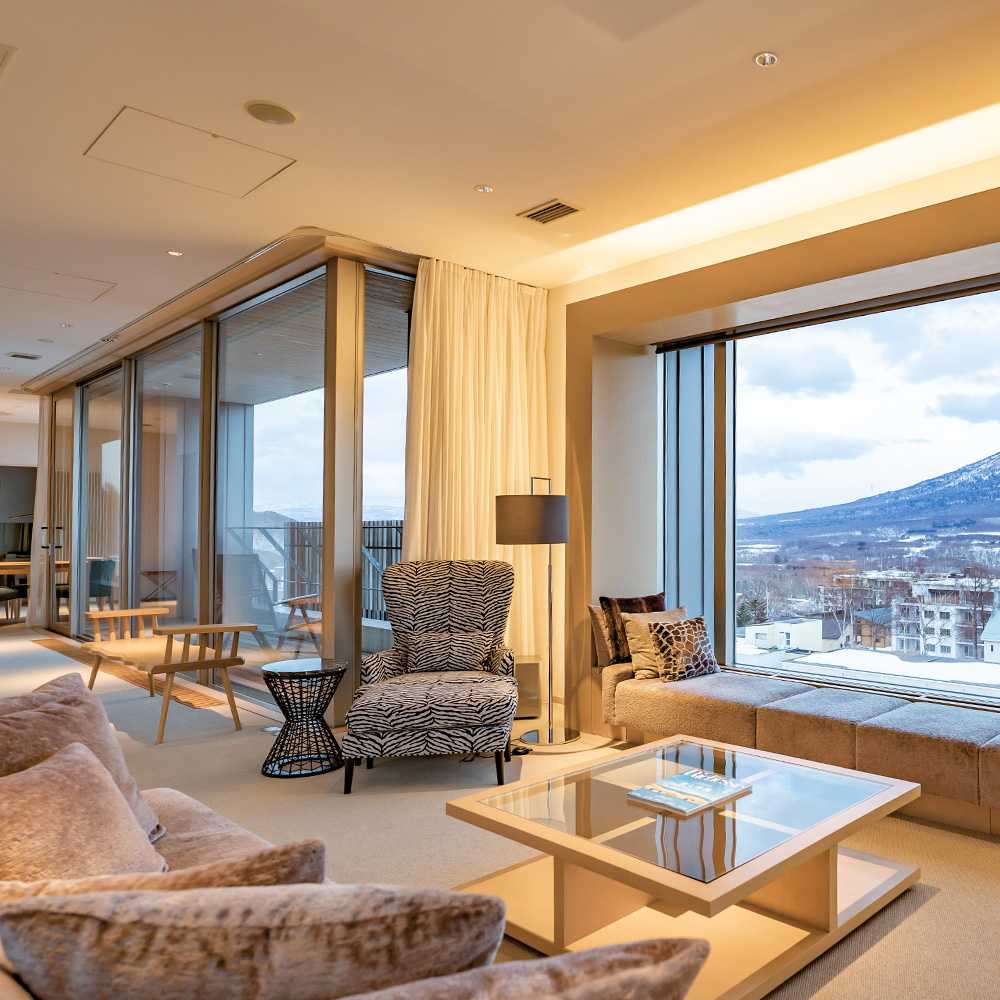 Chalet Ivy Hirafu, Niseko official site
The most-reviewed property in Hirafu at 544 reviews and 9.3 out of 10, with the full bath set recorded and ¥586,000 for five peak nights — the cheapest of the Hirafu onsen hotels with a published rate. A chalet-style hotel rather than a whole house, and the best-value entry point into this group.
Ki Niseko official siteHirafu, 343 reviews at 9.2 out of 10, and no peak rate published anywhere we could read — the property's own site names its onsen plainly, but the price sits behind an enquiry rather than a public calendar, which is common at this end of the market.
If money is not the constraint
Hanazono, a natural hot spring on site, and ¥2,207,900 for five peak nights — the single highest peak total of any property with a page here, and the number that sets Hanazono's area median at three times Hirafu's. 191 reviews at 9.1 out of 10.
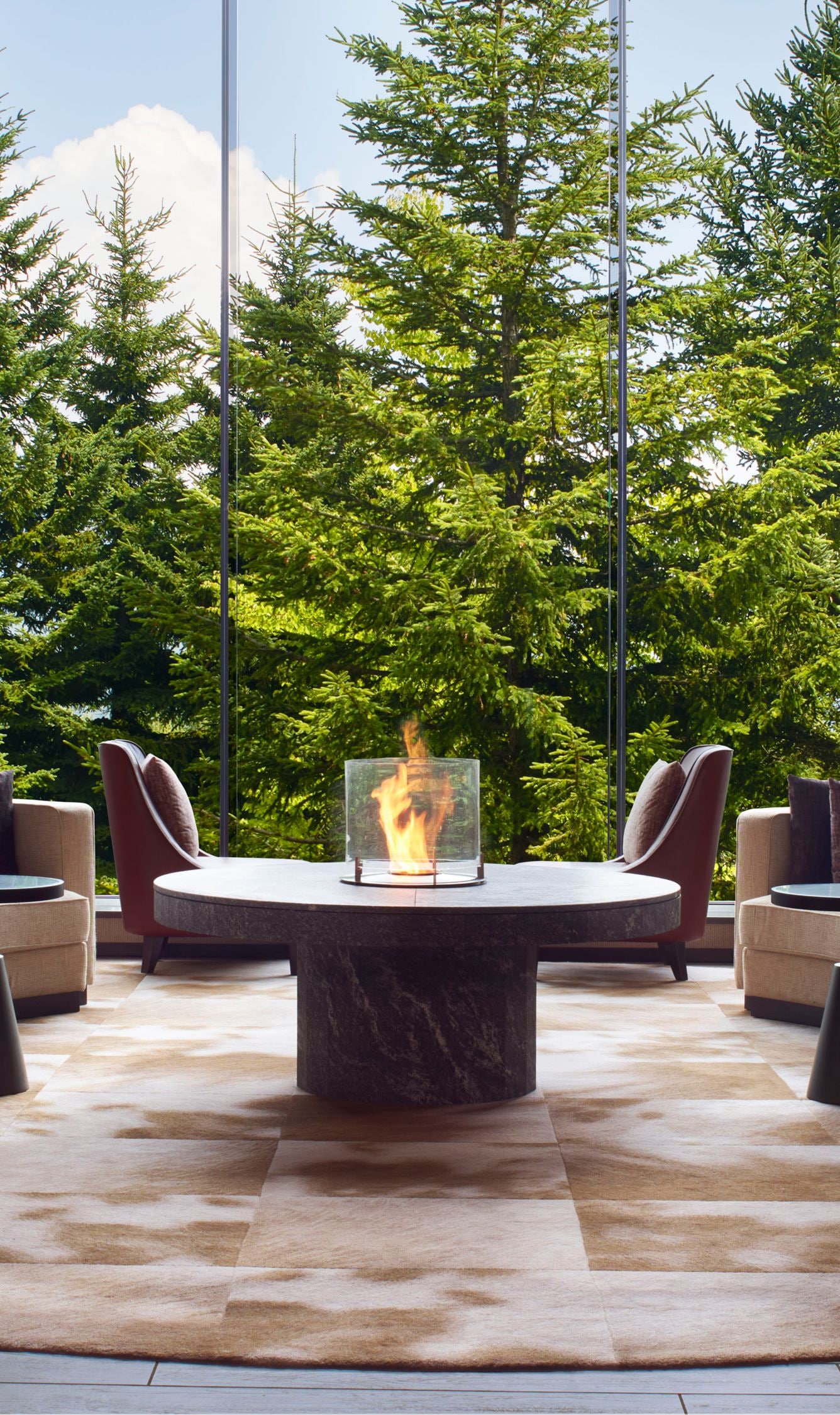 Higashiyama Niseko Village, a Ritz-Carlton Reserve official site
Higashiyama, Niseko Village, with a natural hot spring and ¥1,402,500 for five peak nights. It also takes summer bookings at ¥344,250 — a quarter of the winter rate, and the cheapest route into this property by a long way if the snow is not the point.
Private baths, and why they matter more here
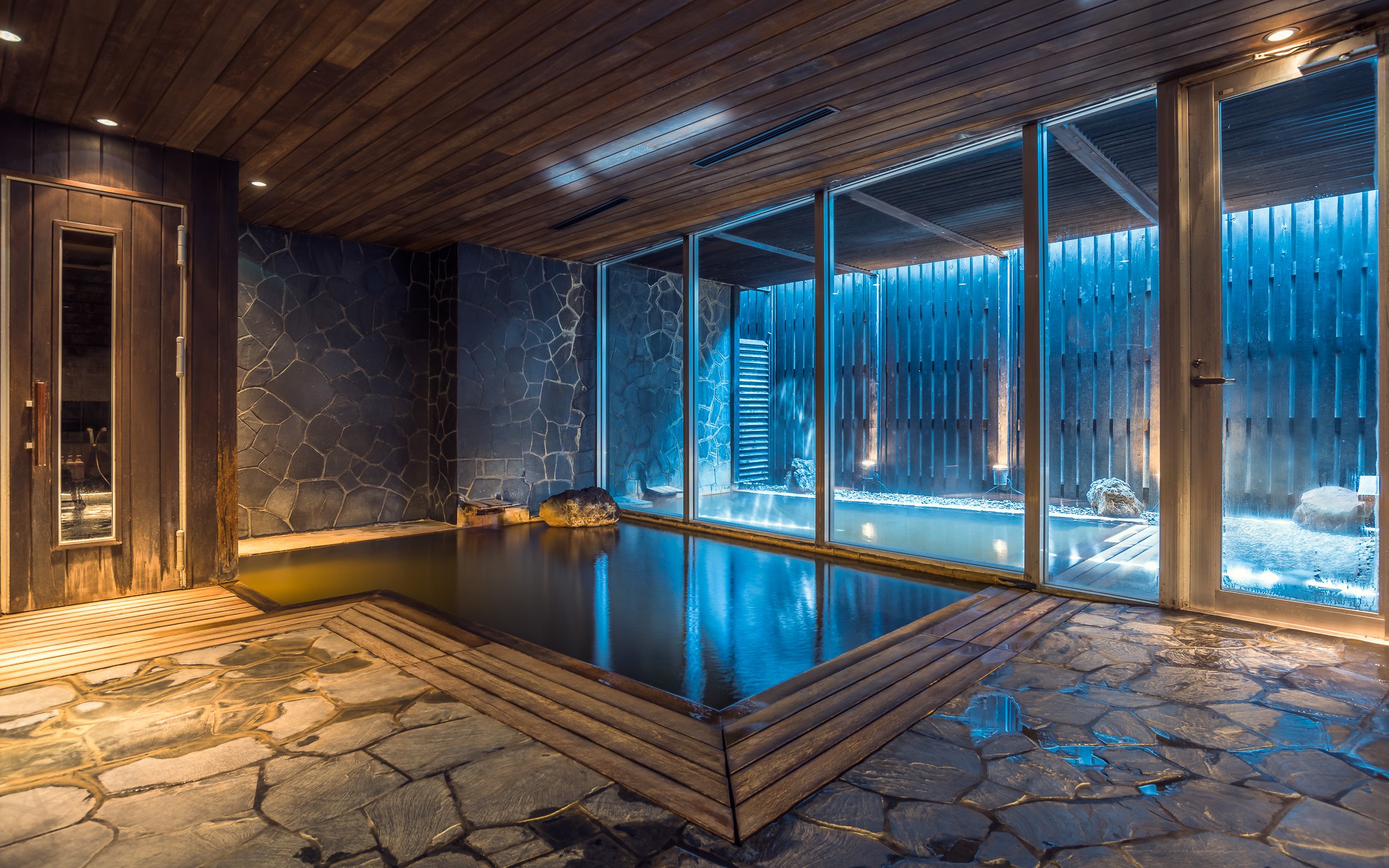
Communal bathing is the part of the onsen that stops some visitors booking one at all: it is gender-separated, it is unclothed, and it has rules you are expected to already know. A private bath — booked by the hour, or attached to the room — removes the question, and several Niseko properties at the upper end have them precisely because their guests asked.
 Sansui Niseko official site
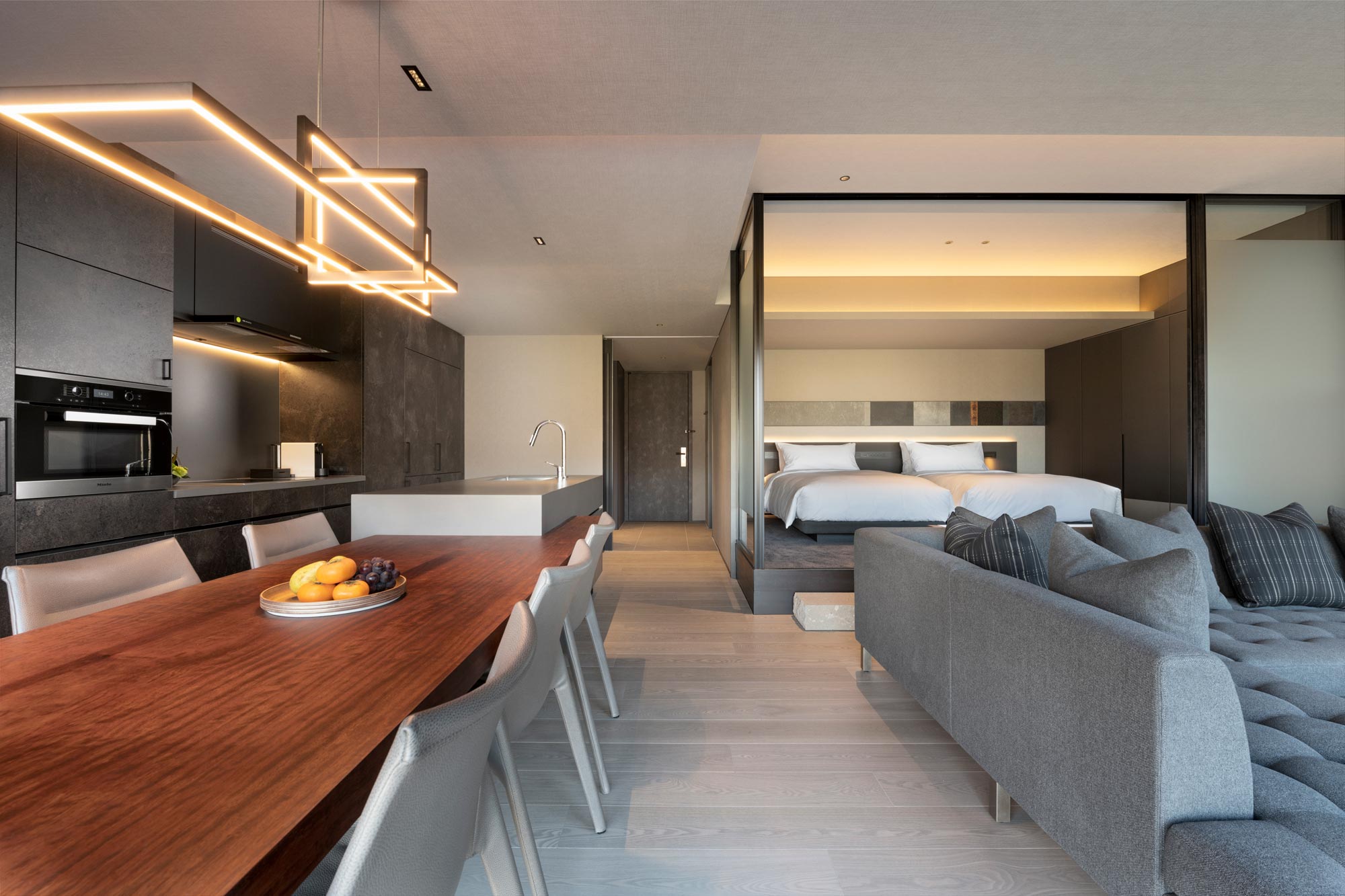
Hirafu, and an example of the data gap running the other way: its own site describes itself as a luxury onsen hotel with private onsen in the suites, while our facility read recorded no bath at all. 95 international reviews against 9 Japanese ones, and ¥900,000 for five peak nights. If a private bath is the requirement, this is the kind of property to ask directly.
Ask three things when you ask about a private bath: whether it is spring-fed or simply a large tub, whether it is bookable or included, and whether it is available on the evening you arrive. All three are commonly assumed and commonly wrong.
What the price difference actually buys
Set the two ends of the list beside each other. Kanronomori, at Konbu Onsen, quotes ¥330,300 for five peak nights. Setsu Niseko, in Hirafu, quotes ¥1,783,100. The Park Hyatt in Hanazono quotes ¥2,207,900. All three record a natural hot spring on site. Every price in this article is read from the property’s Booking.com listing — the room type and guest count are whatever that property was quoting as cheapest at the time, not a fixed configuration.
The water is not the variable. What the money buys, in roughly this order, is the room, the food, the language of the front desk, and the distance to a lift. If you are optimising for the bath alone, the cheapest properties on this list are not a compromised version of the expensive ones — they are the older, more specialised version, and the expensive ones are ski hotels that added a bath.
That inverts the usual advice. In most of Japan, paying more at an onsen buys a better bath. In Niseko it mostly buys a better ski holiday around a comparable one.
The corollary is worth stating plainly: if the onsen is the reason you are coming, the Annupuri side is not the budget option, it is the correct one. If skiing is the reason and the bath is a bonus, the Hirafu and Niseko Village properties are doing something the Konbu inns cannot, and the premium is for that.
The bath is also the most photographed thing in the building
One column on a booking listing predicts a Niseko onsen better than the facility list does, which is the number of photographs the property has uploaded.
The fourteen properties here with a natural hot spring carry a median of 70 pictures on their listing. The other sixty-nine carry 47. A bath is the one part of a Japanese hotel that cannot be described in a room-type name, so the properties that have one photograph it from every angle, and the gallery grows accordingly.
That is useful in both directions. A long gallery on a Japanese-run hotel is a reason to look for 温泉 in the facility list even when the English page is silent. A short gallery on a property claiming a spa is a reason to ask what the spa is.
The sub-scores are the other place to look, and the thing they establish is a negative. Across the fourteen, cleanliness runs from 7.8 to 10 and facilities from 7.7 to 9.9 — and neither column tells you anything about the water. Niseko Prince Hotel Hirafutei records 7.7 for facilities, the lowest of the fourteen, and has a full onsen with an outdoor bath. Chalet Ivy Weiss records 10, 9.8 and 9.9 — the highest of the three across any property here with a spring. Both draw real spring water. The gap between them is the building, the rooms and the food, which is exactly the gap you are paying for and exactly the one the word “onsen” does not describe.
Etiquette, in the order it happens
The rules are simple and the anxiety about them is out of proportion, so here they are in sequence. You undress completely in the changing room and leave everything in a basket or locker; swimwear is not worn and is usually not permitted. You take the small towel with you and leave the large one behind. You wash and rinse thoroughly at a seated shower station before entering the water — this is the part that matters most, and it is not a quick rinse. You get into the bath without the towel touching the water; most people fold it and rest it on their head or the edge. You do not swim, splash or wash in the bath itself. Long hair is tied up. You rinse or do not rinse afterwards according to preference, though many people skip it to keep the minerals on the skin.
Baths are separated by gender, marked 男 for men and 女 for women, and the curtains are sometimes swapped between morning and evening so that both sides get the better view. Read the sign, not yesterday’s memory.
Tattoos are the one genuine variable, and Niseko is more relaxed about them than most of rural Japan because so many of its guests have them. “More relaxed” still means the policy differs property by property, and the only reliable way to know is to ask before you book.
Summer, which nobody mentions
Most of the valley closes when the snow goes, and the onsen properties are among the few things that have a reason to open anyway — the water does not stop. Of the fourteen properties here with a hot spring recorded, only two take summer bookings, and the discounts are steep: the Hilton drops to ¥134,484 for five nights from ¥505,817, and the Ritz-Carlton Reserve to ¥344,250 from ¥1,402,500.
A hot spring in green season is a different proposition from a hot spring in a blizzard, and it is roughly a quarter of the price. If the bath rather than the snow is what you are travelling for, that is the single largest saving available in this article.
What to check before you book
- Is it an onsen, or a large bath? Look for 温泉 in the facility list, not just “spa”.
- Is there an outdoor bath? 露天風呂. In falling snow this is the whole point, and it is the single thing guests describe afterwards.
- Is the water from the property’s own source? Some Niseko hotels draw their own; some are supplied. Both are onsen; the first is usually the one with the older building.
- Is there a private bath? Several properties offer one, which removes the communal question if that is a barrier.
- Is the bath open when you are there? Some close out of season even when rooms do not, and some restrict hours during the ski season when the hotel is full.
- What is the tattoo policy? It varies property by property here, and Niseko is more accommodating than most of rural Japan — but “more accommodating” is not “no policy”.
- Which platform did you read? If the international listing is silent about a bath at a Japanese-run hotel, read the Japanese one before deciding.
Who should pick which
| If you are | Book | The trade |
|---|---|---|
| Prioritising the water over the mountain | Konbu Onsen, Annupuri side | Furthest from the lifts of any onsen cluster, but the cheapest real onsen in the valley and the one international visitors have not found — start at the Annupuri area |
| Wanting to bathe after skiing without leaving the building | Niseko Village | Fewer bath options overall than Hirafu, but the one area where “ski in, bathe, done” is reliably true |
| After a superb bath inside a superb hotel, budget aside | Hirafu | Several times the Konbu price for water of the same geological origin — you are paying for the building, not the spring |
| Someone communal bathing is a real barrier for | A property with a stated private bath | Narrows the list quickly, and the shortlist sits at the top of the market — check before anything else, not after booking |
| Not sure yet whether a specific property has a bath at all | — | Check the full list of stays with a bath, which separates natural springs from large shared baths rather than lumping both under “spa” |
Drawn from the properties whose facility lists we could read in full, ordered by how many guests have reviewed them. It includes large shared baths as well as natural hot springs — the distinction is on each property's page.
Hilton Niseko VillageNiseko VillageOnsen¥101,163 (~$640)/night · 5-night peak avg TORIFITO Hotel & Pod NisekoKutchanWinter only¥58,608 (~$371)/night · 5-night peak avgThe Green Leaf Niseko Village, Tapestry Collection by HiltonNiseko VillageOnsenWinter only¥94,454 (~$598)/night · 5-night peak avgChalet Ivy Hirafu, NisekoHirafuOnsenWinter only¥117,200 (~$742)/night · 5-night peak avgSetsu NisekoHirafuOnsenWinter only¥356,620 (~$2,257)/night · 5-night peak avgKi NisekoHirafuOnsenWinter onlyAya NisekoHirafuOnsenWinter onlyNiseko Konbu Onsen Hotel KanronomoriAnnupuriOnsenWinter only¥66,060 (~$418)/night · 5-night peak avg
Questions
- Which Niseko hotels have their own onsen?
- Among the eighty-three properties with a page on this site, fourteen have an onsen on site. They cluster in two places: the Konbu onsen area west of Annupuri, where the hot-spring inns have been for decades, and a small number of newer luxury hotels in Hirafu and Hanazono that built their own baths.
- What is the difference between an onsen and a daiyokujo?
- An onsen draws naturally heated mineral water from the ground. A daiyokujo is simply a large shared bath, which may be heated tap water. Several Niseko properties advertise a daiyokujo without an onsen, and the distinction is not always clear on a booking page.
- What is a rotenburo?
- An outdoor bath. In Niseko that means sitting in hot water in the open air while it snows, which is the single experience most guests describe afterwards. Most of the properties here with an onsen also have a rotenburo.
- Can I use a Niseko onsen without staying at the hotel?
- Some open their baths to day visitors and some do not, and the policy often changes by season and by time of day. Check the property directly rather than assuming — a hotel that admits day guests in summer may close the bath to outsiders during the ski season.
- Are tattoos allowed in Niseko onsen?
- It varies by property, and Niseko is more accommodating than most of rural Japan because of its international guests. Some properties allow tattoos outright, some ask that they be covered, and some prohibit them. Ask before you book if it matters.
- Is Annupuri the onsen area of Niseko?
- Annupuri and the Konbu onsen area immediately west of it hold the traditional concentration. The name Konbu Onsen is itself the name of the hot spring. Hirafu has onsen too, but they are hotel baths rather than an onsen village.
- Are the onsen hotels full of Japanese guests?
- Several of them are, and it is measurable. Some Niseko onsen hotels carry three times as many reviews on the Japanese booking platform as on the international one, while newer condominium properties nearby show the reverse by a factor of thirty or more. The onsen inns are largely a domestic market that international visitors have not found.
- Do I need to be naked in a Japanese onsen?
- Yes, in the bath itself. Baths are separated by gender, you wash thoroughly before entering, and swimwear is not worn. A private bath, which several Niseko properties offer, removes the question entirely if it is a barrier for you.
- Is a Niseko onsen stay expensive?
- Less uniformly than you would think. Of the properties here with a hot spring recorded on site, the cheapest quotes around ¥330,000 for five peak nights and the dearest around ¥2,200,000 — a range of nearly seven to one for what is nominally the same feature. The water is not what sets the price; the hotel around it is.
- Should I book an onsen hotel or visit an onsen while staying elsewhere?
- If the bath is the point of the trip, stay in one — an in-house onsen is available at six in the morning and at eleven at night, which is when they are best. If it is one experience among many, stay where the rest of your week works and treat the bath as an outing, because several Niseko properties admit day visitors.